John HenryNewman Academy
Modern Foreign Languages
Intent
At JHNA, we believe it is vital to create enthusiasm and excitement around language learning so that children make substantial progress and develop a love of languages. In Key Stage Two, our children are given the opportunity to learn Spanish, ensuring they are well prepared for Key Stage Three and beyond. By focusing on one language across the school, we provide consistency and depth, while also enabling children to experience the richness of another culture. This prepares them to be global citizens now and in their future roles within the community. We believe children learn best when they are immersed in the language, listening to accurate pronunciation and engaging with each other using subject-specific vocabulary. Our aim is to provide a curriculum that develops knowledge and skills which enable children to speak, read, write and listen with increasing confidence, as well as appreciate and celebrate diversity.
MFL teaching and learning is good at JHN when:
- It is interactive and engaging.
- We are learning vocabulary we can use in everyday life.
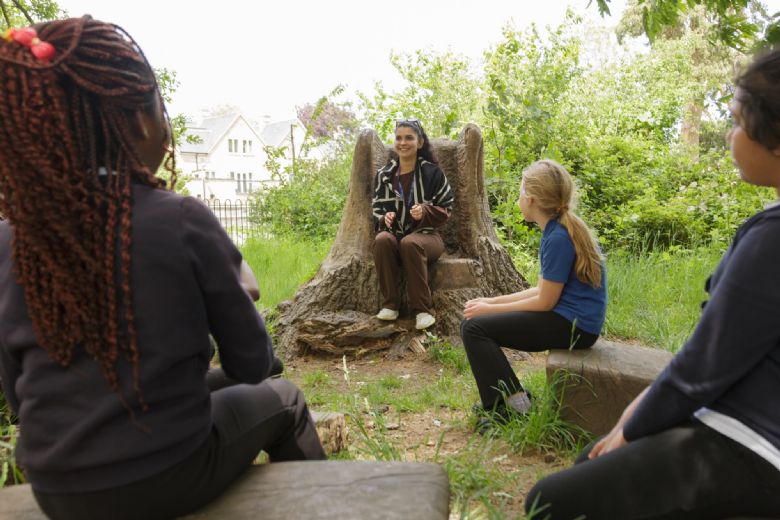
- We explore Spanish culture and traditions.
- We can talk in other languages with our peers.
- We are sharing our learning with others.
Implementation
To ensure children leave JHNA with a rich and balanced MFL curriculum, Key Stage 2 pupils take part in weekly timetabled Spanish lessons led by class teachers. These lessons are carefully sequenced so that children revisit and build on prior knowledge, gradually developing their confidence in speaking, listening, reading and writing. In addition, conversational phrases and greetings are reinforced across the school week, allowing Spanish to become a natural part of everyday routines and transitions. This drip-feeding approach means children are not only exposed to Spanish in discrete lessons but also begin to see it as a living, useful language. Spanish was chosen because it is taught in our local secondary schools, which ensures children are well prepared for the next stage of their learning journey and able to make a smooth transition.
All sessions are carefully planned and adapted to make learning relevant, meaningful and enjoyable. Teachers model accurate pronunciation, provide regular opportunities for paired and group talk, and use interactive activities such as songs, games and role-play to bring language to life. New vocabulary and structures are introduced in small, manageable steps and revisited regularly so that knowledge is retained and applied confidently. Alongside this, children also learn about Spanish culture, traditions and festivals, making connections with their own lives and developing an appreciation of diversity.
We use the Language Angels scheme to provide a coherent sequence of lessons that progressively build knowledge and skills. The programme ensures that children practise all aspects of language learning, listening, speaking, reading, writing and cultural understanding, in a logical and engaging way. To strengthen progression further, we also draw on Chris Quigley’s Essentials Curriculum, which highlights the four key skills that underpin our MFL curriculum: Read Fluently, Write Imaginatively, Speak Confidently and Understand the Culture in which the Language is Spoken. These skills are revisited across units, allowing children to deepen their understanding and apply what they have learned in increasingly sophisticated ways.